The Digital Platform for Male Fertility
Lab-grade fertility testing from home – Semen analysis, testosterone, and hormone insights, all in one place.
We are

The Most Comprehensive At-Home Male Fertility Platform
Male factors cause 30–50% of fertility issues. SwimScore combines lab-grade tests with clear guidance, helping you understand results and take confident next steps.
Understand your health
Why Test Fertility Health?

Understand your health
Why Test Fertility Health?

Understand your health
SwimScore Measures What Matters
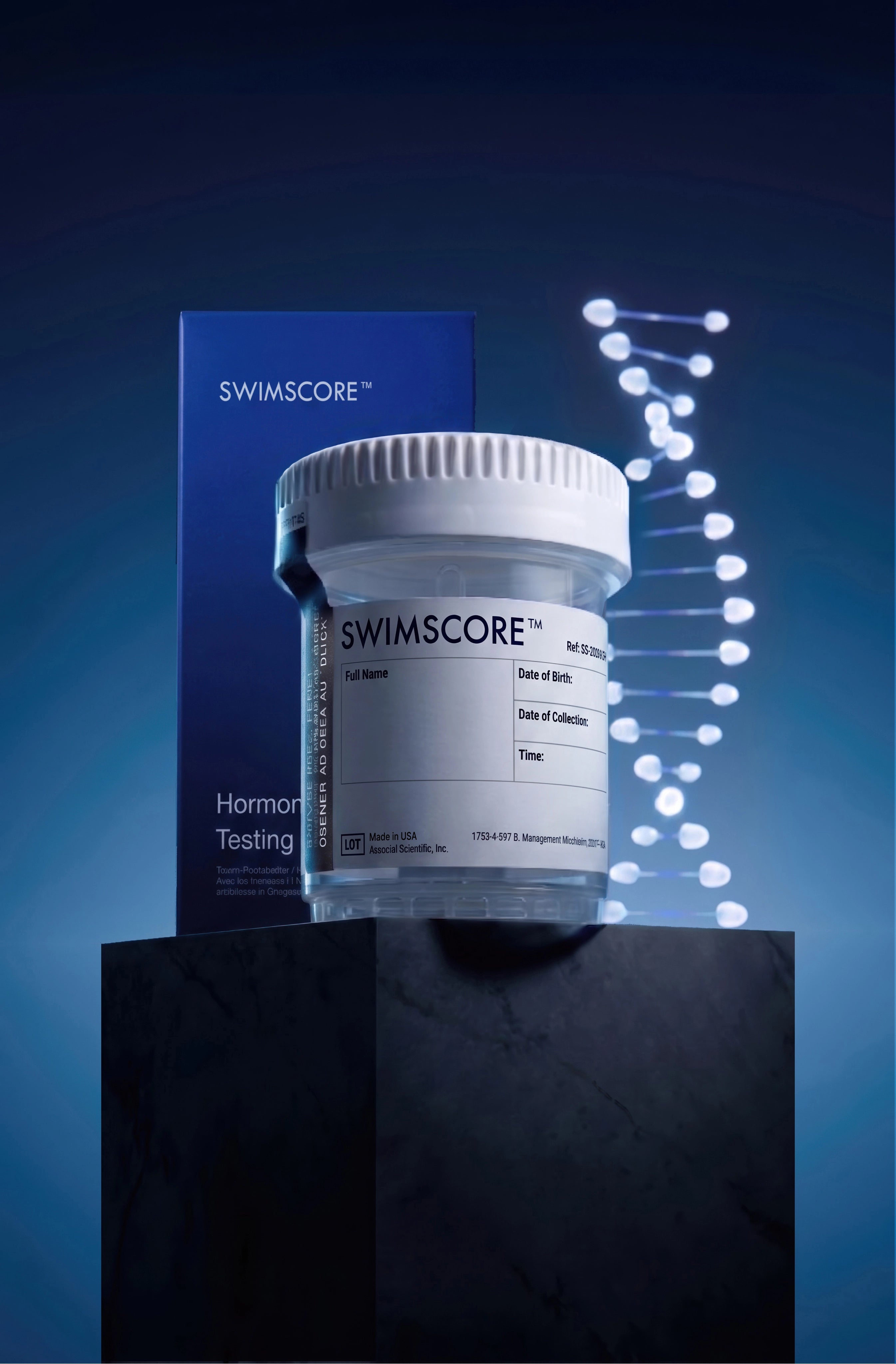
SwimScore gives you a clear picture of fertility by combining WHO-standard semen parameters, testosterone and hormone insights, and DNA quality metrics — helping you understand what’s truly influencing fertility.
-

Moving Sperm (TMSC)
This measures the total number of moving sperm in your sample. Higher counts generally improve the chances of natural fertilization.
-
Forward Movement (PR)
This measures how effectively sperm swim forward. Strong forward movement helps sperm travel through the reproductive tract and reach the egg.
-
Sperm Shape (MORPH)
Healthy sperm have a normal shape. Properly shaped sperm are more likely to reach and penetrate the egg.

-
DNA Quality (DFI)
This measures the genetic health of sperm. Higher DNA damage can reduce fertility and increase miscarriage risk.

-
Fertility Hormone Panel
This measures hormones that control how your body makes semen, including testosterone, FSH and LH. Balanced levels support sperm production and help explain changes in semen quality over time.


Your SwimScore brings all these factors together—giving you an easy-to-understand score that reflects both your fertility potential and your overall reproductive health.
START IMPROVING YOUR SWIMSCORE TODAY
The Easiest Place Is Home
Skip the clinic. SwimScore lets you test fertility at home — fast, private, and stress-free.
| SwimScore | Traditional clinics | |
| Sample collection |
 At home, on your schedule
|
 In-clinic “collection room”
|
| Semen analysis |
Up to 21 clinically
relevant metrics
|
Sperm concentration,motility, morphology
|
| Hormone panel (blood test) |
At home - comprehensive hormone panel (Testosterone, FSH, LH & more)
|
Separate lab visit,
referral often required
|
| DNA Fragmentation testing |
Available with Advanced & Complete tests
|
Sometimes available
(often +$500)
|
| Prescription required |
No
|
Referral needed
|
| Time to get started |
Ships within 2 business days
|
2-4 weeks (or more)
|
| Results turnaround |
~48 hours after lab receipt
|
1-2 weeks (or longer)
|
| Fertility clinician consult |
Included with results
|
Often $300+ per visit
|
| Actionable next steps |
Personalized guidance
|
Follow-up appointment required
|
| Overall experience |
Fast, Private, Lab grade testing from home
|
Slower, clinic-based, fragmented
|
Your SwimScore brings all these factors together—giving you an easy-to-understand score that reflects both your fertility potential and your overall reproductive health.
START IMPROVING YOUR SWIMSCORE TODAY
Measure & Improve Your SwimScore

Essential
Semen Analysis only
$199
- Establishing a fertility baseline
- Anyone starting with testing
- Monitoring changes over time

Advanced
Semen + DNA Fragmentation
$299
- Those who want context behind semen results
- Low energy, libido or prior abnormal tests
- A more complete fertility picture upfront
Complete
Semen + DNA Fragmentation + Hormone Panel
$399
- Couples actively trying to conceive
- Prior IVF, miscarriage or unexplained infertility
- Those who want the most comprehensive assessment
Understand your health
Why Test DNA Fragmentation?

Understand your health
Why Test DNA Fragmentation?

Ongoing Medical Insight
Why Doctors Recommend Testing Regularly
Medical experts advise quarterly testing to monitor DNA fragmentation and progress. A subscription lets you follow your biology over time, not just once. Ongoing care is recommended by doctors.
Make Smarter Fertility Decisions.
Whether you’re planning ahead or trying to conceive now, testing more than once gives clarity and confidence. Trends over time say far more about fertility than a single test ever can.
See The Trend, Not The Anomaly.
One test can be affected by stress, illness, or a recent fever. Testing over time separates temporary dips from real patterns in sperm health.
Track Real Change, Not Just A Snapshot.
Sperm takes around 2–3 months to develop, so today’s results reflect past habits. Regular testing shows how your lifestyle is actually affecting your fertility over time.
Ongoing Medical Insight
Why Doctors Recommend Testing Regularly
Medical experts advise quarterly testing to monitor DNA fragmentation and progress. A subscription lets you follow your biology over time, not just once. Ongoing care is recommended by doctors.
SwimScore services are currently available to individuals located in the United States, excluding Alaska, Hawaii, and New York. Telehealth consultations are provided by licensed healthcare professionals in states where they are authorized to practice and may not be available in all jurisdictions.
SwimScore uses a CLIA-certified laboratory and industry-standard semen analysis methods to measure key fertility parameters. Results are reviewed using the same scientific principles used in fertility clinics, giving you reliable, lab-grade insights from home.
Sperm takes about 70–90 days to fully develop. If you’re tracking improvements or making lifestyle changes, we typically recommend retesting every 2–3 months to see meaningful trends over time.
SwimScore analyzes the same core semen parameters as most in-clinic fertility tests, but without the inconvenience or awkwardness of a clinic visit. You get lab-grade results, clear explanations, and the ability to track changes over time — all from home.
Yes. SwimScore is built with privacy at its core. Your data is encrypted, stored securely, and handled in compliance with HIPAA standards. Your results are yours — we never sell or share personal health data without your consent.
Not yet — but it’s on our roadmap. We plan to integrate wearable and lifestyle data to help you better understand how sleep, stress, activity, and recovery may impact your fertility over time.
Your SwimScore translates complex lab results into a simple, easy-to-understand score, along with detailed explanations of each metric. You’ll see how your results compare to clinical reference ranges and what they may mean for fertility.
Once your sample arrives at the lab, results are typically available within 2–3 business days. You’ll be notified as soon as your SwimScore is ready.
Yes. Factors like sleep, stress, nutrition, exercise, alcohol use, and heat exposure can all impact sperm health. Because sperm regenerates over time, positive changes today can lead to measurable improvements in future tests.